
TFCC Tear Symptoms
Pain on the pinky (ulnar) side of your wrist?
These are common TFCC tear symptoms.
Learn how to recognize the most typical signs of a TFCC injury.
Clicking, weakness, or pain during rotation and weight-bearing are typical signs.
• Trusted by hand therapists • Used worldwide • Secure checkout
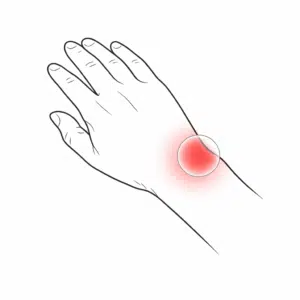
TFCC pain is typically located on the pinky side of the wrist (ulnar side).
Most common symptoms
Typical complaints include:
• Pain on the ulnar (pinky) side of the wrist
• Clicking or catching during forearm rotation
• Pain when turning a key or opening a jar
• Pain when pushing up from a chair
• Weakness during gripping
• Reduced tolerance to weight-bearing
Symptoms can be mild at first and gradually get worse. Some people feel pain mainly during activity, while others also notice aching at rest.
These TFCC tear symptoms often worsen during twisting motions or when placing weight on the wrist.
When symptoms increase
TFCC-related discomfort often increases during:
- Pronation and supination (palm up ↔ palm down)
- Compressive loading of the wrist
- Repetitive twisting tasks
- Weight-bearing positions such as push-ups or planks
If your pain spikes with rotation (palm up ↔ palm down) or with pushing through the hand, TFCC involvement is more likely.
You can perform a Weight Bearing Test to see if your wrist pain may be related to a TFCC injury.
Could it be a TFCC injury?
Not all ulnar-sided wrist pain originates from the TFCC. Tendon irritation, arthritis, or other ligament injuries can cause similar symptoms.
However, persistent rotational pain combined with clicking and load sensitivity increases the likelihood of TFCC involvement.
Learn more about TFCC injury and its causes.
When to seek professional evaluation
While a proper diagnosis should be made by a healthcare professional, some simple observations may help you understand whether your symptoms resemble TFCC involvement.
- Pain lasting longer than 1–2 weeks
- Increasing instability
- Clicking that becomes painful
- Swelling that does not improve
- Difficulty with daily tasks
If symptoms persist, worsen, or interfere with daily activities, a clinical assessment is recommended.


