
TFCC Injury – Symptoms, Test and Treatment
Pain on the pinky side of your wrist?
Difficulty pushing yourself up from a chair, turning a key, or lifting objects?
A TFCC injury is a common cause of ulnar-sided wrist pain.
It affects the triangular fibrocartilage complex, a structure that stabilizes the distal radioulnar joint (DRUJ) and helps distribute load through the wrist.
• Trusted by hand therapists • Used worldwide • Secure checkout
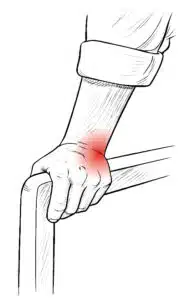
What is a TFCC Injury?
The TFCC consists of cartilage and ligaments that stabilize the distal radioulnar joint (DRUJ) and allow smooth forearm rotation.
A TFCC injury refers to irritation, degeneration, or tearing of this structure.
Because the TFCC controls rotational stability and load transfer, damage may result in pain, instability, and reduced functional capacity.
Causes of TFCC Injury
Acute
- Fall on an outstretched hand
- Sudden rotational force
- Traction injury
Degenerative
- Repetitive strain
- Age-related wear
- Chronic overload
How TFCC injury is diagnosed
Clinical examination
- Palpation tenderness
- Load tolerance testing
- RUJ stability assessment
Imaging
- MRI
- MR arthrogram
- Ultrasound (select cases)
One commonly used assessment is the weight bearing test for TFCC injuries.
Conservative treatment
Many TFCC injuries respond well to non-surgical management.
- Activity modification
- Load management
- Functional wrist stabilization
- Hand therapy
Targeted stabilization may reduce strain on the DRUJ and support recovery.
WristWidget® is a functional TFCC wrist support used by hand therapists to stabilize the distal radioulnar joint during rehabilitation and reduce pain during weight-bearing activities.
When surgery is considered
Surgical treatment is typically reserved for persistent instability, structural tears, or failure of conservative management.


